Executive summary
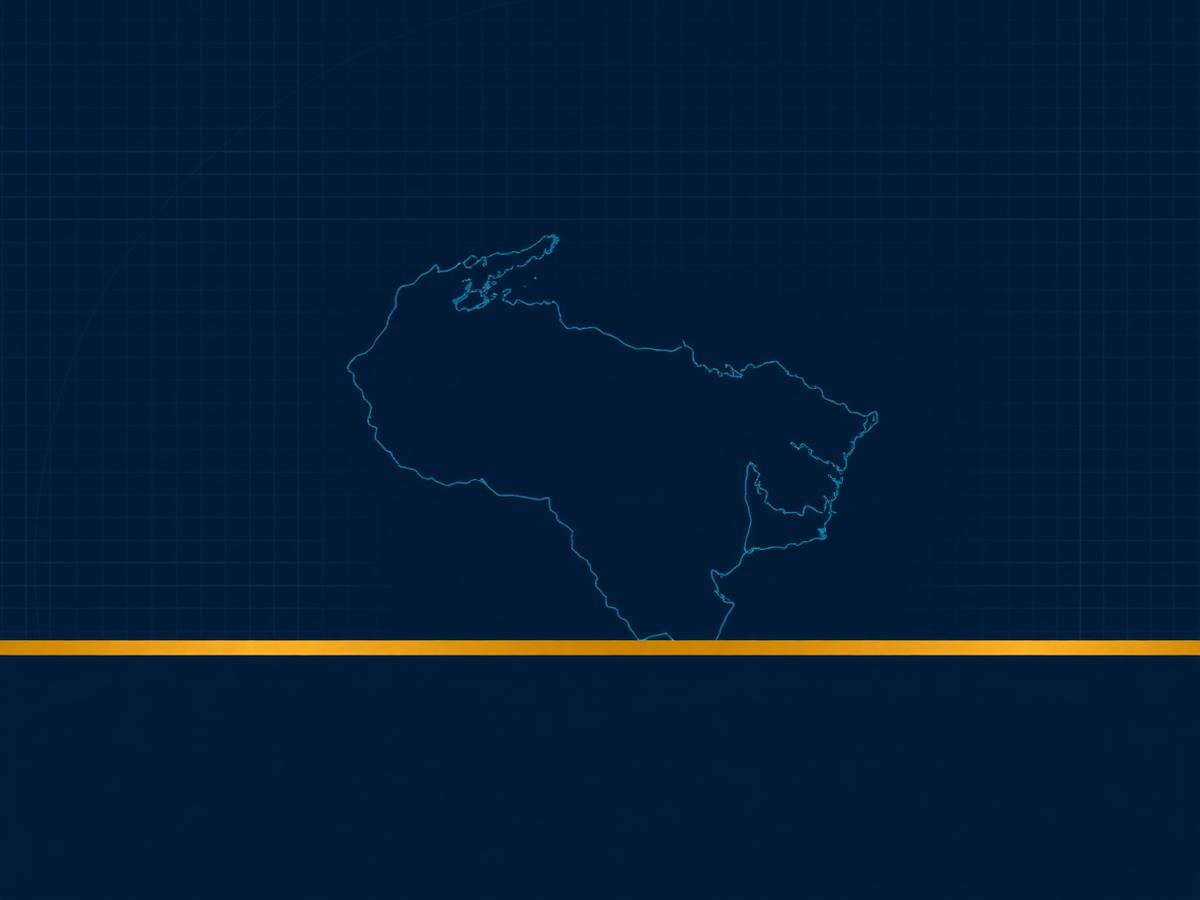
Negotiations between Venezuela's interim government and an opposition delegation began on 6 August 2026 with U.S. backing. The talks are intended to address political-system restructuring ahead of future elections. Their opening was a meaningful de-escalatory signal, but the process remains fragile because not all opposition constituencies are represented and implementation mechanisms remain undefined. UPDATE, 3 SEPTEMBER 2026: U.S. and Venezuelan leadership have both indicated that Venezuela is not yet ready to hold a new election. Neither side has published the conditions that would constitute readiness, nor a timetable for reaching them. The absence of defined criteria converts an apparently procedural statement into a substantive political fact: the transition process now has no external benchmark against which progress or delay can be measured, and both parties retain discretion to define readiness in their own favour. Sentinel Meridian assesses that the open-ended posture lowers near-term escalation risk while raising medium-term legitimacy risk. An interim arrangement that persists without an electoral horizon accumulates challenges to its authority, weakens the incentive for excluded opposition factions to remain inside the process, and complicates the legal durability of commercial arrangements concluded during the interim period - including those described in SM-2026-TA-116 on the oil control accord.
- Political process stall
- 4/5
- Legitimacy and mandate contestation
- 4/5
- Institutional friction
- 4/5
- Contract enforceability for investors
- 4/5
- Civil unrest
- 3/5
- Abrupt escalation
- 2/5
Relative risk across the 12-month forecast horizon, updated 3 September 2026 to reflect the absence of a defined electoral timetable.
Key judgments
- The talks continue to lower the immediate probability of abrupt political escalation but do not resolve Venezuela's institutional crisis.
- Statements that Venezuela is not yet ready for a new election, absent published conditions or a timetable, leave the transition without a measurable benchmark.
- Indefinite interim governance accumulates legitimacy risk; authority exercised without an electoral horizon is more easily contested domestically and internationally.
- Partial opposition participation remains the central structural weakness; excluded factions gain incentive to contest the process from outside as delay lengthens.
- U.S. backing raises the diplomatic weight of the process while making foreign influence the dominant domestic political narrative.
- Sanctions policy is now the principal lever and the principal uncertainty; relief tied to undefined readiness criteria is inherently reversible.
- Civil stability risk is currently low-to-moderate but is sensitive to service delivery, wage conditions, and any perception that the process has stalled permanently.
- Investor risk is concentrated in enforceability. Contracts concluded under an interim authority whose electoral mandate is undefined carry elevated review, renegotiation, and arbitration exposure.
- This assessment should be read together with SM-2026-TA-116; the political window and the energy accord are legally and politically interdependent.
The full assessment, including sourcing, analytic confidence statements, and indicators and warnings, is available in the downloadable PDF.
Download full PDF